THE $143,000,000 SYSTEMS FAILURE
The Totality of the Gathers, the Math of Attrition,
and a Commonsense Model to Save the American West.
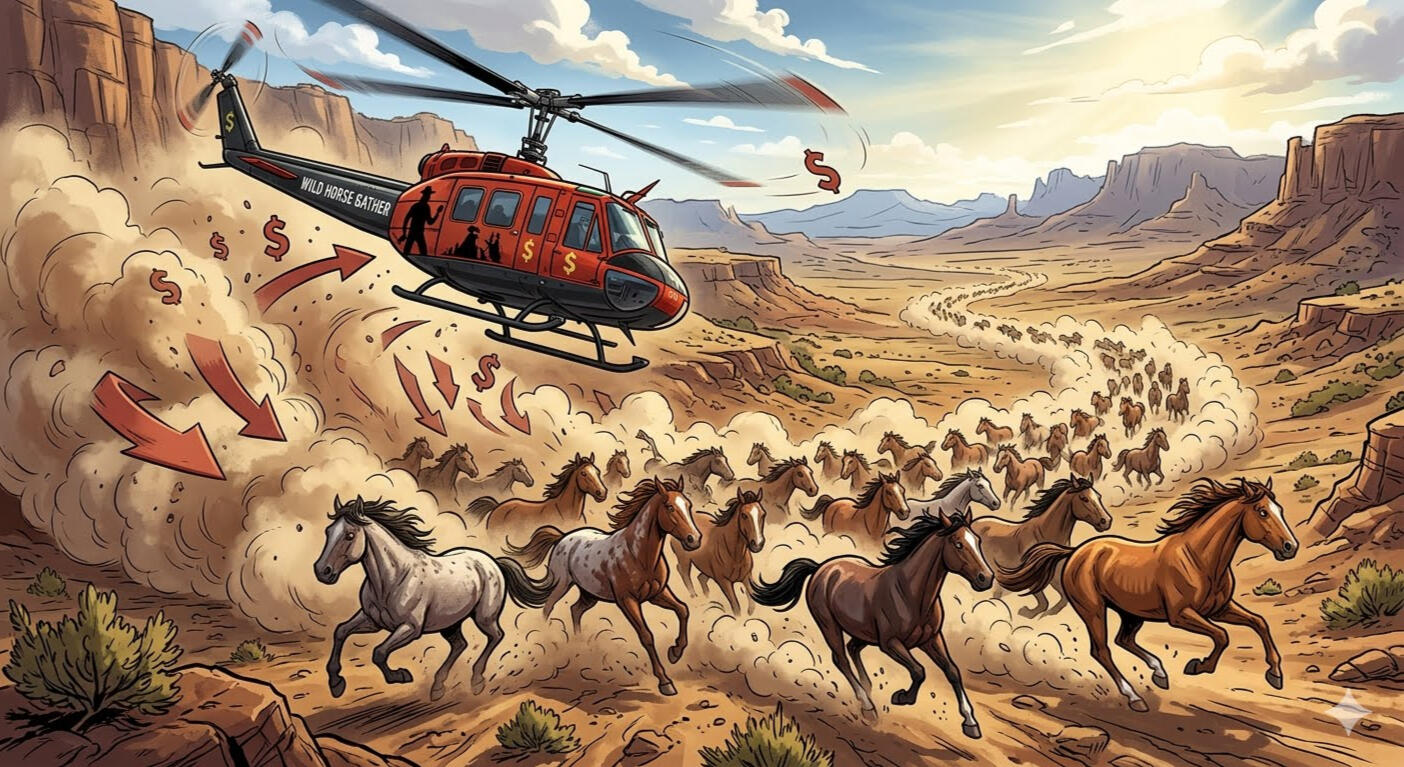
Every year, the federal government spends millions of taxpayer dollars executing high-stress helicopter roundups—chasing wild herds to physical collapse, separating equine families, and funneling them into a lifetime of artificial confinement.The budget for this self-perpetuating cycle has ballooned to an immense $143 Million.There is a better, more humane, and fiscally conservative way.By keeping wild horses on their historic ranges—protecting them as "components of the public lands" as unanimously mandated by Congress in 1971—we can divert this $143 Million to directly compensate grazing permittees, restore native ecosystems, and deploy natural fire mitigation that protects our communities and first responders.We are the Iron Standard. We expose the financial waste, publish the forensic data, and map the path to a free, balanced range.
THE TOTALITY OF THE GATHERS:
Managing Public Lands Through Localized Eradication
The Bureau of Land Management (BLM) and the U.S. Forest Service claim to manage wild equines for "thriving natural ecological balance." In practice, they manage for localized eradication.THE SYSTEMIC INVENTORY CRASH
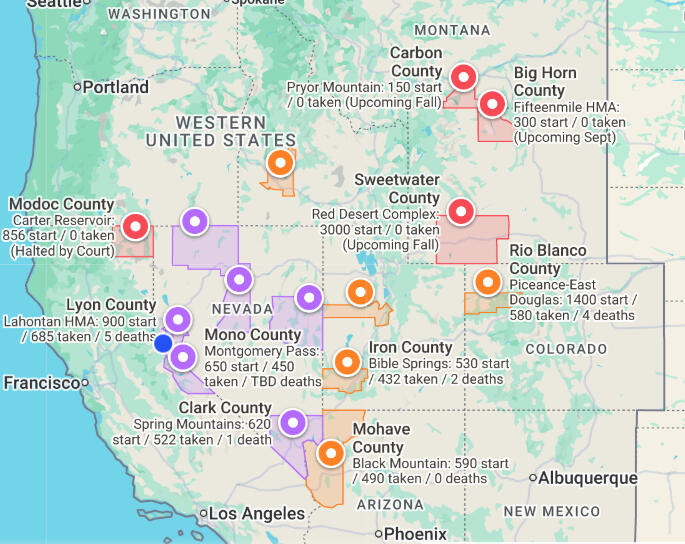
By utilizing administrative "lumping"—merging distinct, geographically isolated herds into massive multi-million-acre administrative units—public land managers hide localized population collapses from public oversight:
• Bald Mountain HMA: Exposed a catastrophic -78.2% localized population collapse.
• Callaghan HMA: Documented a severe -31.4% population crash in a single management cycle.
• The "Micro-AML" Strategy: Gathers like the Lahontan roundup target the reduction of wild herds down to a maximum of 7 to 10 horses, guaranteeing immediate genetic collapse and functional eradication in direct violation of federal land-use mandates .THE ANATOMY OF A helicopter GATHER
Helicopter roundups are inherently high-stress, dangerous, and abusive. Wild horses—including heavily pregnant mares and newborn foals—are pursued at sustained speeds over rugged volcanic terrain by low-flying aircraft.This extreme physical exertion induces panic, causing traumatic injuries, broken bones, miscarriages, and fatal capture myopathy. The public is systematically blocked from viewing 90% to 95% of these operations, shielding the brutal reality of the gathers from the taxpayers who fund them.
THE IRON STANDARD MODEL:
Keep the Horses on the Range. Supplement the Permit Holders.
The primary excuse used to justify the mass removal of wild horses is "forage competition" with commercial cattle leases on public land. Public grazing allotments are heavily protected by state and federal rules written by and for the livestock industry, allocating the vast majority of public rangeland forage (measured in Animal Unit Months, or AUMs) to private cattle.THE STATUTORY MANDATE
When Congress passed the Wild Free-Roaming Horses and Burros Act of 1971, it unanimously declared that wild horses are "an integral part of the natural system". Section 3 of the Act explicitly authorizes and directs land managers to protect and manage wild horses "as components of the public lands". They are not an invasive species; they are returned native keystone species.THE FINANCIAL SOLUTION
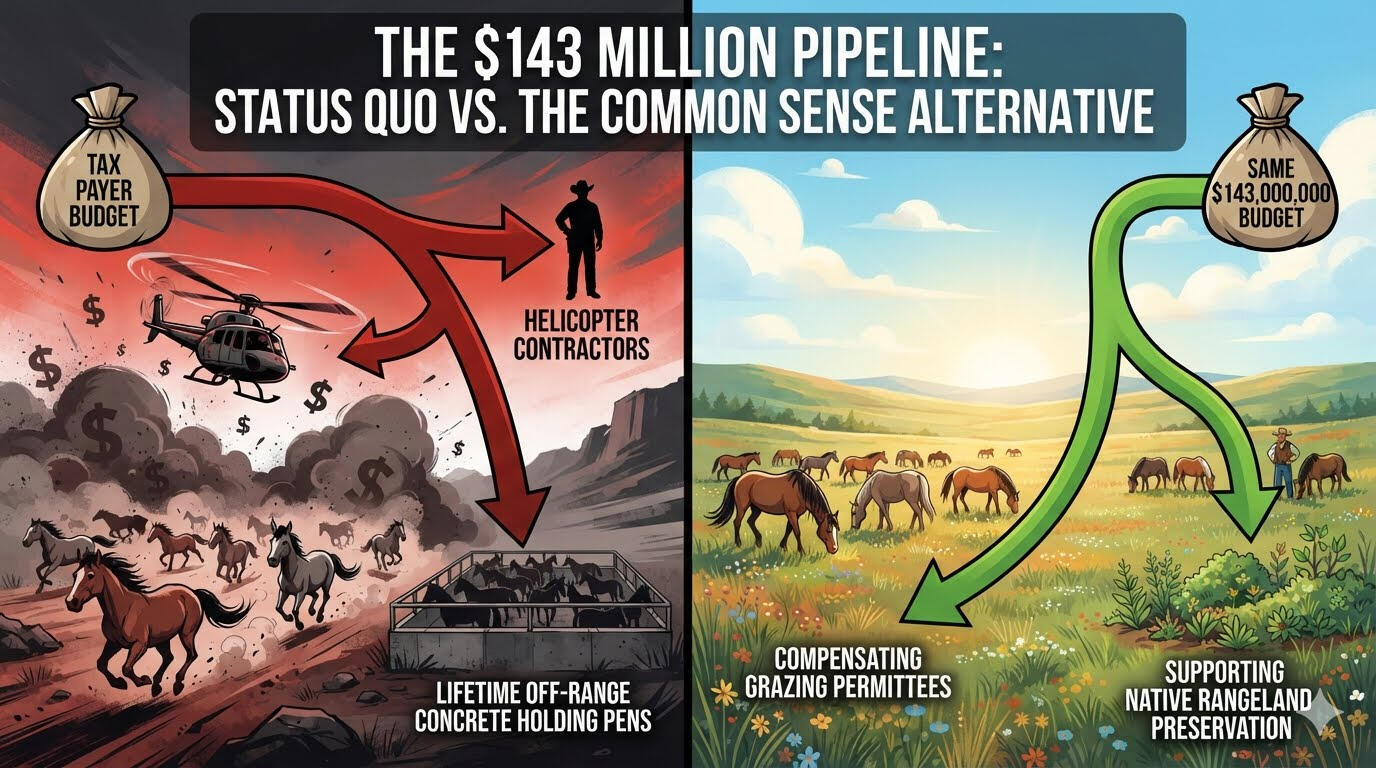
Instead of spending $143 Million on helicopter fuel, capture contracts, and lifetime holding fees—which has created a massive backlog of over 60,000 horses languishing in government pens—this budget should be redirected to a direct supplement program.We propose a direct, structured payout of the $143 Million budget directly to public grazing permit holders.If ranchers are financially compensated for sharing the range, the artificial conflict over forage disappears. Taxpayers are saved from funding endless roundups, local ranching economies are directly subsidized by federal funds, and horses are left on the range to perform their natural, co-evolved ecological roles.
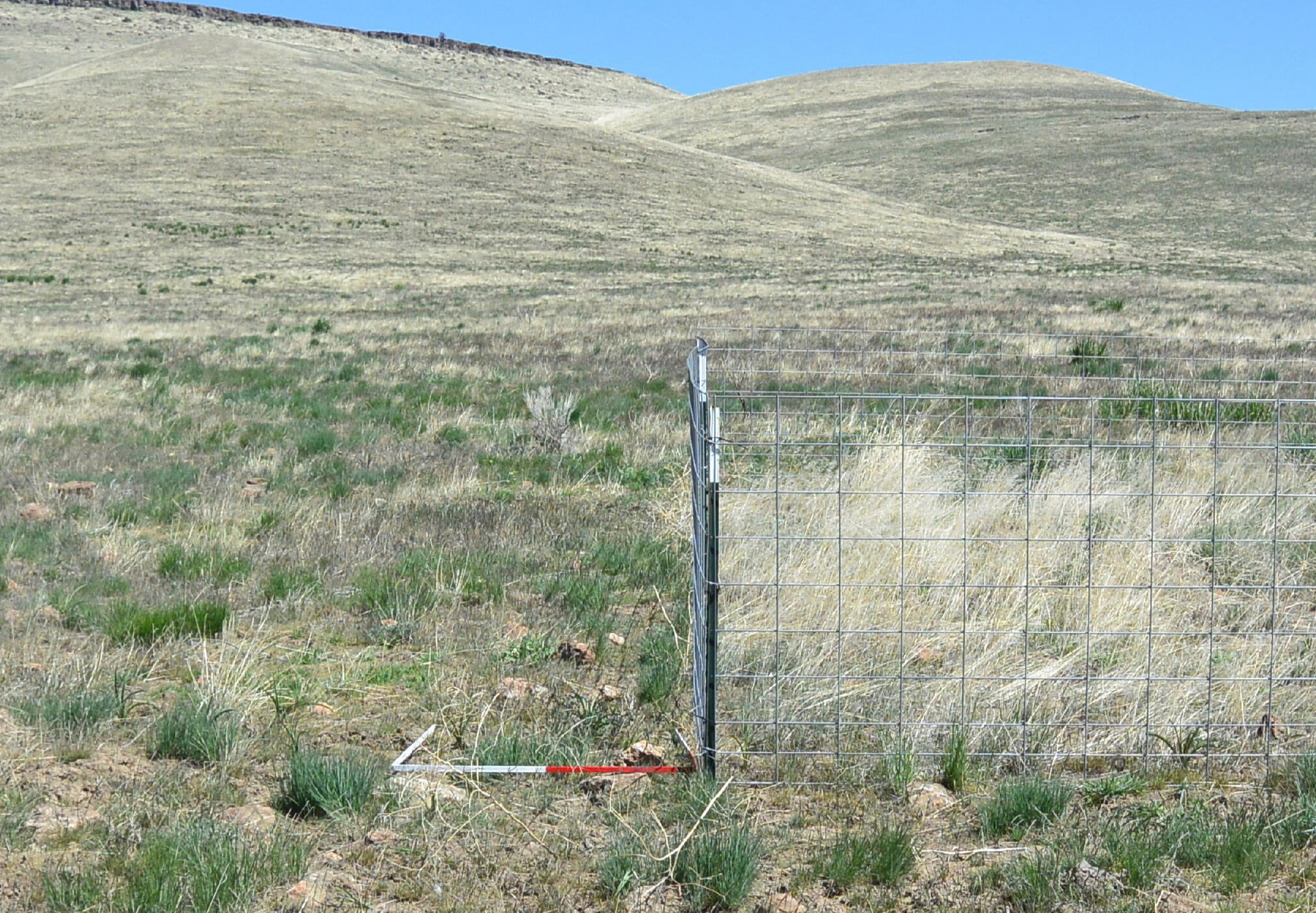
Photo courtesy of Kirk Davies.
THE NATURAL FIRE BRIGADE:
How Wild Horse Grazing Saves Communities and Protects Firefighters
When wild horses are rounded up and removed from their native ranges, they leave behind a silent, ticking time bomb: unmanaged flash fuels.WILD HORSES AS ECOSYSTEM ENGINEERS
Wild horses are non-ruminant, highly active herbivores. Unlike cattle, which cluster around fragile riparian areas, wild horses roam across high-altitude slopes and dry hillsides. They graze year-round, targeting invasive grasses and combustible weeds—such as cheatgrass and whitetop—that act as highly volatile wildfire fuel loads.THE DAVIS FIRE PROOF
During the devastating Davis Fire, this ecological reality was proven in real time. In areas along the foothills where wild horses had grazed the hillsides down, fuel loads were naturally suppressed. This created a natural, defensible space that successfully kept fuel loads low and helped prevent the fire from continuing its destructive path eastward into residential communities.REDUCING THE STRAIN ON FIRST RESPONDERS
By removing wild horses, land management agencies force high-risk fine fuels to grow uncontrolled on both public and private lands. This guarantees more frequent, severe, and rapid-running rangeland fires.Every horse removed by a helicopter is a free, highly efficient "lawn mower" taken off the mountain. Leaving horses on the range to create natural firebreaks directly reduces the frequency and intensity of catastrophic wildfires. This doesn't just save homes—it directly reduces the life-threatening physical strain, exhaustion, and peril placed on our wildland firefighters and first responders.We don't need to import goats, and we don't need to spend millions on artificial mastication. We simply need to let the horses do their job.